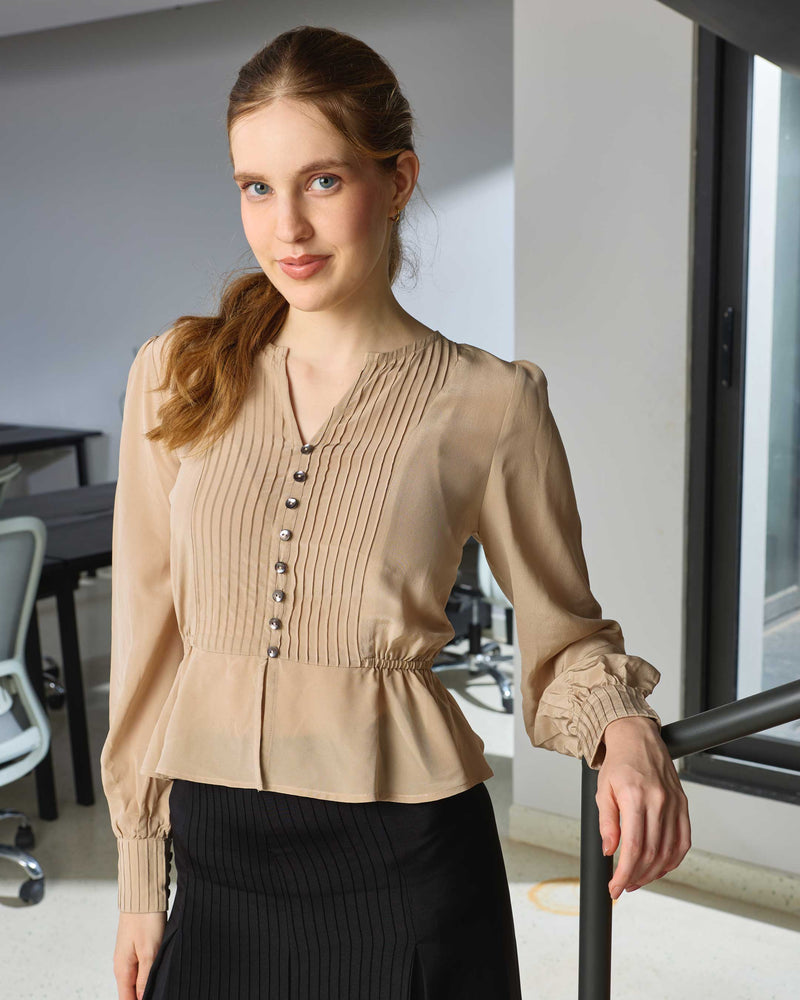
Why Silk Became the Foundation of Eighth Hour
I used to keep a version of the same suitcase packed for months at a time, the one built for a 7 a.m. flight, a client meeting, and a dinner that would run long, all in the same outfit if I could get away with it. What actually wore me down wasn't the schedule. It was standing in front of that suitcase, every single time, trying to guess which piece would survive all three without looking like it had been through any of them.
What I ruled out first
I went through fabric mills for months testing this the only way that tells you anything real: wear it, wrinkle it, stuff it in a bag, fly in it, sit through a four-hour meeting in it, see what's left. Viscose looked sharp on the hanger and gave up by the second wear, one sat in an aircon-cold departure lounge and it never quite recovered. A few technical synthetics held their shape all day, which sounds like a win until you realize you've been slightly clammy since 9 a.m. and just accepted it as normal. None of it solved the actual problem, which was never really about the fabric holding its shape. It was about not having to think about it at all.
Mulberry silk was the first thing that let me stop thinking about it. I remember the exact flight nine hours, the kind where you land not knowing what time zone your body is in, half expecting the blouse I had on to look like I'd slept in it, because everything else always had. It didn't. It came off the plane looking like it had just been pressed, stayed cool through the layover, and by the time I was in a freezing meeting room two hours later, it had somehow warmed with me. That's the moment silk stopped being a fabric I liked and started being one I trusted.
Why I kept coming back to it
Here's the part about the benefits of silk that took me longer to understand than it should have: it isn't precious because it looks expensive. It's silk clothing for women that actually works, it's thermoregulating, so it's cool against your skin in a Delhi summer and gently warm in a London January, which is most of why I never had to build a separate travel wardrobe.
It's naturally hypoallergenic and resists the bacteria that cause odor, which no one puts this on a swing tag, but it means it holds up on the kind of day that starts at airport security and ends at a dinner you didn't plan to stay at. And it gets better with wear. Mine haven't thinned out or gone limp the way everything synthetic in my closet eventually does. They've just gotten softer. I don't save my silk pieces for occasions anymore. I wear them until they've clearly been loved, which was never something I could say about anything else in my closet.
That staying power means more to me now than it used to. Most clothing today gets worn a handful of times before it's binned, and the fashion industry generates an estimated 92 million tonnes of textile waste every year, a number that traces back to the Ellen MacArthur Foundation and gets repeated everywhere from the UN to sustainability panels I've sat on, mostly because nobody's found a way to make it less alarming.
Mulberry silk is also a genuine form of biodegradable clothing, which is more than I can say for most of what's sitting in landfill from my closet a decade ago. I didn't want to add to that pile. I wanted to do the opposite: fewer pieces, kept for years, that actually go back into the ground when they're finally, truly done.
Where mine comes from
Every piece of handwoven silk starts on a handloom, woven by artisans in [region/weaving cluster, the actual place your silk is woven], people who've spent years, sometimes their whole working lives, inside this one craft. It would be faster and cheaper to have all of it machine-loomed. I didn't, because the slowness is the actual point, it's what you're paying for when a brand calls itself an ethical clothing brand instead of just printing the phrase on a hangtag. I've stood on those looms enough times to know exactly what I'm asking someone to give up if I ever cut that corner, and it's not one I'm willing to make.
Why this became the foundation
I didn't set out to build a brand around a fabric. I set out to solve a suitcase problem, one flight at a time. But once I'd worn my way through enough failures, mulberry silk was the only thing that held up on every front I actually cared about, how it performs, how long it lasts, who makes it and how they're treated while they do. That's not a founding myth I'm telling after the fact to sound good. It's just the order it actually happened in.
That's what Eighth Hour is built on, not a trend borrowed from the wider conversation around sustainable fashion brands, but a fabric that happens to hold up to scrutiny from every direction you'd want to check it. Explore the handwoven silk edit, mulberry silk clothing including women's silk blouses and separates built as capsule staples for the days you don't have time to think twice about what you're wearing.